
17
2026
-
11
Cloud Based Access Control Systems Drive the Digital Transformation of Enterprise Security Management Through Cloud Data Integration
Discover how cloud based access control systems improve enterprise security through remote management, centralized data, and flexible access permissions.
Author:
As enterprises continue to deepen their digital transformation, traditional access control methods are no longer sufficient to meet the needs of multi-location offices, remote permission configuration, and centralized security management. This is particularly important for companies with multiple office areas, branch locations, or large industrial parks, where unified personnel access management and real-time equipment status monitoring have become essential security requirements. Cloud based access control systems provide more flexible access control solutions through cloud data storage, remote access, and centralized management, helping businesses move toward digital security management.
Integrate Cloud Data for Centralized Management
Traditional access control systems usually require operations through local devices or independent management platforms, resulting in relatively fragmented data management across different locations. Cloud based access control systems can integrate data from multiple access control devices through a cloud platform, connecting different office locations and entrances to a unified management system.
Administrators can use a single platform to check device status, manage user information, and adjust access permissions without operating each access control device individually. This centralized management approach reduces repetitive tasks and improves overall enterprise security management efficiency.
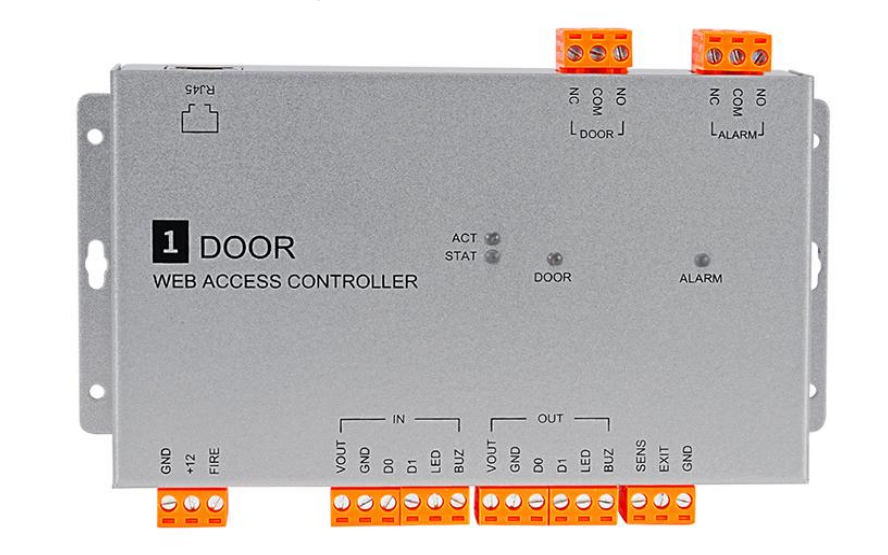
For example, a network access controller designed for single-door management can support up to 100,000 users and 100,000 access event records. This capacity provides sufficient data management support for many commercial and enterprise access control applications, while allowing administrators to maintain centralized user information and access history.
Support Remote Access and Permission Configuration
Remote management is one of the major advantages of cloud-based access control systems. Administrators can access the management platform through computers or supported mobile devices to add users, modify permissions, or revoke authorization according to actual requirements.
For example, when an employee changes positions, leaves the company, or a visitor's access period expires, administrators can promptly update the corresponding permissions. For enterprises with multiple office locations, this approach reduces the need for on-site operations and makes access management across different areas more flexible.
With a TCP/IP interface and RJ45 web server connection, compatible access control hardware can connect to network-based management platforms. This provides a practical communication foundation for remote configuration and centralized device management, depending on the software and network environment.
Improve Coordination Across Multiple Access Control Devices
For large enterprises and chain organizations, different office locations may have various types of access control devices installed. Cloud based access control systems can support data coordination between multiple controllers and card readers, depending on system configurations and network connectivity.
The controller supports two Wiegand reader inputs, with Wiegand 26/34-bit communication and customizable formats. It also supports one-door management, providing connection options for compatible card readers and related access control equipment.
Through a unified management platform, enterprises can centrally configure personnel access permissions across different locations and adjust access rules for individual entrances according to actual requirements. This helps address the management difficulties associated with traditional access control systems operating independently.
Strengthen Access Control Data Management and Security
Access control systems do more than regulate personnel entry and exit. They also generate user information, access records, and equipment operating data. Through a cloud platform, enterprises can manage relevant data centrally and use features such as permission levels, data encryption, and access logs to strengthen information protection.
Meanwhile, administrators can retrieve historical access records, monitor personnel entry and exit activities, and obtain useful data for daily security management and the investigation of unusual events, depending on the system's capabilities.
The controller operates on DC 12V, 1A power input and has a power consumption of approximately 500mA, excluding external devices. These specifications are useful considerations when planning the power supply and installation arrangements for an access control project.
Conclusion
Cloud based access control systems provide enterprises with more flexible security management through cloud data integration, remote permission configuration, multi-location device management, and access record inquiries. Whether deployed in commercial office buildings, industrial parks, or enterprises with multiple branch locations, a properly configured cloud-based access control system can improve management efficiency and help transform traditional security systems toward digitalization and intelligent management.
When selecting access control hardware for cloud-based applications, enterprises should consider user capacity, communication interfaces, reader compatibility, and event record storage. A controller supporting 100,000 users, 100,000 event records, and TCP/IP communication can provide a practical hardware foundation for compatible network-based access management solutions.
News